

Who Has the Right of Way in a Parking Lot?
In a parking lot, pedestrians come first, drivers backing out yield to moving traffic, and drivers leaving the lot stop and yield before the street.
Bianca Galvan
Product & Content at GetMyPermit
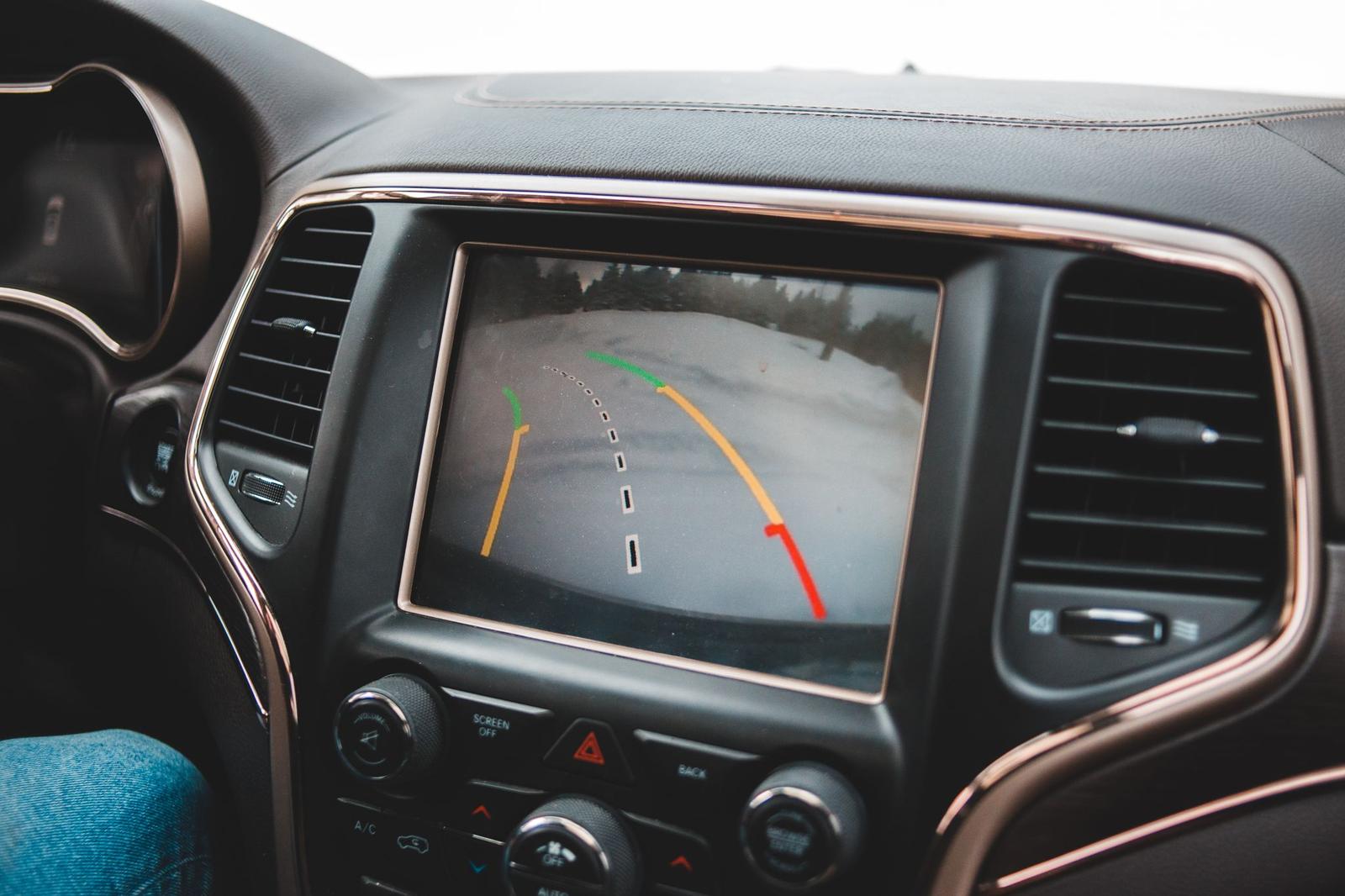
In a parking lot, pedestrians come first. State handbooks tell drivers to drive slowly, yield to people on foot, and look all the way around before backing out of a space. When you leave the lot, you stop before the sidewalk and yield to pedestrians and to traffic already on the street.
Parking lots feel like a free-for-all because there are no lane lines, few signs, and cars moving in every direction. The rules below come straight from official state driver manuals and federal guidance, so you know what is actually written down and what is just habit.
Do pedestrians always have the right of way in a parking lot?
Yes. This is the one rule every handbook agrees on. California's guide to driving maneuvers has a short section called "Parking Lot Driving" that sums it up in three points:
- Check traffic and pedestrians when entering, exiting or driving in a parking lot.
- Drive slowly.
- Yield the right-of-way to pedestrians.
Other states say the same thing in different words. Colorado's DMV tells drivers to be very cautious around parking lots and other places where pedestrians are likely. Connecticut and Arkansas list "shopping centers, parking lots and downtown areas" as trouble spots where you need to slow down, because vehicles and people are stopping, starting and moving in different directions. Wisconsin's handbook also puts parking lots on its list of places to slow down.
The California rule doesn't limit this to crosswalks. Treat every person in the lot as someone you need to stop for.
Who has the right of way when backing out of a parking space?
The driver backing out has the hardest job, because you can't see well behind your vehicle. No handbook we checked gives a backing driver priority over anyone. Instead, the manuals tell you to wait and look until your path is clear.
Here is what the official manuals say to do before and while you back up:
- Check behind the car before you get in. Arkansas warns that children or small objects cannot be seen from the driver's seat.
- Turn your body and look. Virginia and Oregon both say the most common mistake when backing up is failing to look both ways behind you, and that mirrors do not give a full view. Turn your head and body to the right and look out the rear window.
- Check your blind spots and mirrors. Colorado tells drivers to check blind spots and mirrors while backing out of a parking space or driveway.
- Look for small children. New York says to look carefully behind your vehicle for approaching pedestrians, especially small children, before backing up, and not to rely only on mirrors when children are near.
- Back up slowly. Virginia and Oregon say to back up slowly while glancing to either side for pedestrians and approaching traffic.
- Get help if you can't see. Arkansas suggests using a person outside the vehicle to help guide you whenever possible.
The practical takeaway: if a car is driving down the aisle behind you or someone is walking past, wait. You only back out once the space behind you is empty.
What if two cars back out at the same time? None of the official sources we read names a winner in this situation. Their advice is the same for both drivers: back slowly, keep looking, and stop. Don't assume the other driver has seen you.
Does the driving lane or the parking aisle have priority?
Many larger lots have two kinds of driving space:
- Main driving lanes (sometimes called feeder or perimeter lanes) that run around the lot or connect the entrances to the street.
- Parking aisles, the lanes between rows of parking spaces.
Federal traffic guidance treats these two differently. The Manual on Uniform Traffic Control Devices (MUTCD), the national standard for signs, signals and pavement markings, covers roadways inside places like shopping centers, office parks, airports and schools when the public can use them. But the MUTCD says it does not apply to parking areas, "including the driving aisles within those parking areas," whether they are publicly or privately owned (MUTCD 11th Edition, Section 1B.01). It defines a driving aisle as the area for vehicles within a parking area, typically between rows of parking spaces.
So a ring road around a mall may have signs and markings that follow the national standard, while the aisles between parked cars usually don't.
When you pull from an aisle onto a main lane, the closest written rules are the general ones about entering a road. Arkansas says drivers entering a road from a driveway, alley or roadside must yield to vehicles already on the main road, and Virginia says drivers entering any intersection must yield to traffic already in it. Treating the main lane like the main road and yielding to cars already on it follows the same idea.
Not confirmed: none of the state handbooks we checked has a rule that names parking lot aisles or feeder lanes and says which one has priority. If your lot has stop signs, yield signs or arrows, follow them. For the general rules at intersections, four-way stops and uncontrolled intersections, see our guide to right of way rules.
Do you have to stop at stop signs in a parking lot?
Yes, you should always stop. A stop sign in a parking lot tells everyone who is expected to go first, and other drivers and pedestrians will be counting on you to obey it. The tricky part is whether a ticket for ignoring it is enforceable, and that depends on your state and city.
New York is a clear example of how this works. New York's Vehicle and Traffic Law says its rules apply on public highways, on private roads open to public motor vehicle traffic, and in "any other parking lot." But the same section says the rules on stop signs, traffic signals, yield signs, other traffic control devices, one-way roads, stopping, standing, parking and turning apply to a parking lot only when the city, village or town has adopted a local law to make them apply (NY VTL Section 1100).
In other words, in New York, whether a parking lot stop sign is enforced like a street stop sign can depend on the local government. Other states handle this in their own ways, so check your state's vehicle code or ask local police if you need a firm answer for a specific lot.
Either way, a stop sign in a lot is there because the owner or local government decided cars need to stop at that spot. Stopping costs you two seconds and keeps you out of a crash.
Do traffic laws apply in a parking lot on private property?
Some do and some don't. It depends on the state and on the specific law.
Connecticut's Office of Legislative Research looked at this question after a crash in a convenience store parking lot. Its report found:
- Many Connecticut motor vehicle laws limit police enforcement to specific places. For example, the reckless driving law covers public highways, parking areas for 10 or more cars, private roads with speed limits and school property, among others.
- Other laws have no such limit. Driving without required insurance and driving with a suspended license can be charged whether you are on public or private property.
- A Connecticut appeals court ruled in 2002 that driving with a suspended license is a violation whenever the person drives, on public or private property.
The report notes that it is not a legal opinion, but it shows the pattern well: "it's private property" does not mean anything goes. Some laws follow you into the lot, some apply only in larger lots, and some only apply on public roads.
For teens and new drivers, the safe approach is simple. Drive in a parking lot as if every traffic law applies. Your permit or license restrictions, your insurance and your responsibility if you hit someone don't disappear because the pavement belongs to a store.
Who has the right of way when leaving a parking lot?
When you exit a lot onto the street, you are the one who yields. State manuals are very consistent here:
- Virginia: you must always stop when entering a street or crossing over a sidewalk from a driveway, alley, building or parking lot.
- Oregon: stop before you enter or cross a road from an alley, driveway or parking lot not controlled by signs or signals, and yield to approaching vehicles and pedestrians. If you cross a sidewalk when leaving a parking lot, stop before reaching the sidewalk and yield to pedestrians and people riding bicycles.
- Arkansas: drivers crossing a sidewalk when entering or exiting a driveway, alley or parking lot must yield to pedestrians.
- Montana: drivers must stop and yield when exiting from a private driveway, parking lot or alley, then move forward to a point of clear visibility and go when the way is clear.
So the order is: stop before the sidewalk, let pedestrians and bike riders pass, pull up to where you can see, then wait for a safe gap in street traffic.
Entering a lot from the street works in reverse. Connecticut and Arkansas both count shopping center and parking lot entrances as intersections, which means you look left and right and check for pedestrians before you turn in. If you are turning left into a lot, oncoming traffic goes first.
How do you drive safely in a parking lot?
Putting the official advice together, a safe trip through a parking lot looks like this:
- Keep your speed low. Every handbook that mentions parking lots says to slow down.
- Expect movement in every direction. Connecticut and Arkansas describe parking lots as places where vehicles and people are stopping, starting and moving in different directions.
- Yield to everyone on foot. California's parking lot rule is to yield the right-of-way to pedestrians.
- Follow posted signs and arrows. Oregon notes that some parking areas post signs for reverse angle or back-in only parking.
- Center your car in the space. Missouri reminds drivers to center their vehicle so others have room to get in and out.
- Back out slowly and keep looking. Stop the moment you see a car or person behind you.
Will parking lot right of way be on the permit test?
The rules behind parking lot right of way are in your state's driver manual: yielding to pedestrians, stopping before the sidewalk when leaving a driveway or lot, and backing safely. California's guide to its supplemental driving test also lists parking lot driving among the maneuvers to practice.
If you want to check how well you know these rules, you can take practice tests to study for your permit test. State pages are available for California, New York, Virginia, Oregon, Arkansas, Connecticut and Montana.
Related reading:
- Right of Way Rules: Who Goes First, Explained
- Pedestrian Crossing Sign: What It Means and What to Do
- Regulatory Signs: The Road Signs You Must Obey
- What Is on the Road Test? Skills the Examiner Checks
Sources
- Preparing for Your Supplemental Driving Performance Evaluation, DL 956 (California DMV)
- Virginia Driver's Manual, Section 3: Safe Driving (Virginia DMV)
- 2026-2027 Oregon Driver Manual (Oregon DMV)
- Arkansas Driver License Study Guide (Arkansas Department of Public Safety)
- Module 2.3 Right of Way and Yielding Fact Sheet (Montana Office of Public Instruction)
- Chapter 11: Sharing the Road (New York DMV)
- Vehicle and Traffic Law Section 1100 (New York State Senate)
- Pedestrian Safety Tips (Colorado DMV)
- Connecticut Driver's Manual (Connecticut DMV)
- Motor Vehicle Violations on Private Property, OLR Report 2012-R-0012 (Connecticut General Assembly)
- Wisconsin Motorists' Handbook (Wisconsin DOT)
- Missouri Driver Guide (Missouri Department of Revenue)
- MUTCD 11th Edition, Part 1: General (FHWA)
Free permit practice test for your state
Ready to check what you know? Take a free 10-question test from your state's driver handbook, with every answer explained. No sign-up needed. See questions and pass marks for every state.
- Alabama
- Alaska
- Arizona
- Arkansas
- California
- Colorado
- Connecticut
- Delaware
- Florida
- Georgia
- Hawaii
- Idaho
- Illinois
- Indiana
- Iowa
- Kansas
- Kentucky
- Louisiana
- Maine
- Maryland
- Massachusetts
- Michigan
- Minnesota
- Mississippi
- Missouri
- Montana
- Nebraska
- Nevada
- New Hampshire
- New Jersey
- New Mexico
- New York
- North Carolina
- North Dakota
- Ohio
- Oklahoma
- Oregon
- Pennsylvania
- Rhode Island
- South Carolina
- South Dakota
- Tennessee
- Texas
- Utah
- Vermont
- Virginia
- Washington
- West Virginia
- Wisconsin
- Wyoming