

Can You Turn Right on Red? Rules, Red Arrows and Left on Red
Right on red is allowed after a full stop unless a sign says no, but New York City bans it. See red arrow, left on red and yellow light rules.
Bianca Galvan
Product & Content at GetMyPermit
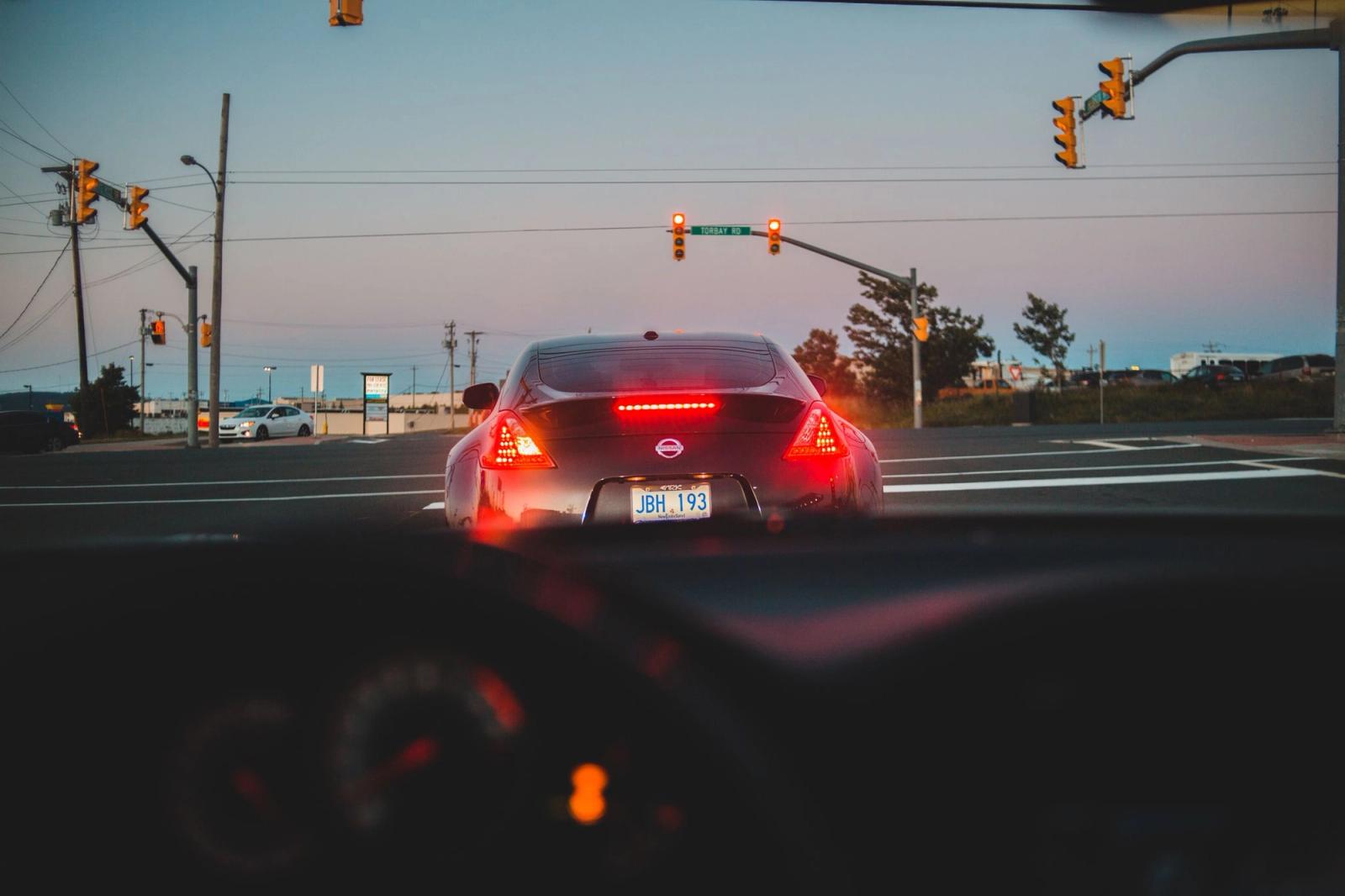
Yes, in most places you can turn right on a red light. You have to come to a complete stop first, yield to pedestrians and cross traffic, and skip the turn if a NO TURN ON RED sign is posted. This rule comes from the national standard for traffic signals, the MUTCD, and every official state source we checked follows it.
The big exception is New York City. The New York DMV says you are not allowed to turn on a red light in New York City unless a sign that permits it is posted.
Can you turn right on red?
The MUTCD (Manual on Uniform Traffic Control Devices) is the federal standard for signs and signals. Section 4A.03 says that a driver facing a steady red light may turn right after stopping, unless a sign prohibits the turn or a steady red arrow is showing.
The MUTCD adds that the turn follows the same rules as after a stop at a STOP sign. In other words, you stop first and go only when the way is clear.
State handbooks say the same thing in plain words. Pennsylvania's manual says: "You may turn right while the light is red, unless a NO TURN ON RED sign is posted at the intersection."
What are the right turn on red rules?
Here is how to do it correctly, based on the handbooks we checked:
- Stop completely. Stop at the stop line. If there is no line, stop before the crosswalk, or before the intersection if there is no crosswalk.
- Look for a sign. A NO TURN ON RED sign means you wait for green.
- Yield to pedestrians. Anyone in the crosswalk goes first. Virginia also tells you to check for motorcycles, bicycles and mopeds, which are harder to see.
- Yield to cross traffic. Wait for a gap big enough to enter safely. Washington's guide says you need "plenty of room to enter traffic."
Right turns on red are one of the places where the right-of-way rules matter most, because you must let pedestrians and cross traffic go first.
When can't you turn right on red?
You can't turn on red in these situations:
- A NO TURN ON RED sign is posted. In the MUTCD, this sign is code R10-11 (with versions R10-11a and R10-11b). Related signs include R10-11c (NO TURN ON RED EXCEPT FROM RIGHT LANE) and R10-11d (NO TURN ON RED FROM THIS LANE). Some apply only at certain hours, so read the whole sign. You can learn more about regulatory signs in our road sign meanings guide.
- You are in New York City, unless a sign allows it.
- A red arrow is showing, in many states (see below).
Can you turn on a red arrow?
This is where states differ.
- California: "Do not turn at a red arrow." You stay stopped until a green light or green arrow appears.
- New York: "A right or left turn on red is not permitted at a red arrow."
- Virginia: You may not turn at a red arrow unless a sign at the intersection reads "Right on Red Arrow After Stop" or "Left on Red Arrow After Stop."
- Oregon: The same turns allowed at a steady red light are allowed at a red arrow.
The MUTCD has a sign for this, too: RIGHT (LEFT) ON RED ARROW AFTER STOP, code R10-17a, used where turns on a red arrow are allowed.
Can you turn left on red?
Sometimes. The MUTCD allows a left turn on red from a one-way street onto another one-way street, after stopping, under the same conditions as a right on red.
Many handbooks we checked allow this one-way to one-way left turn, including California, Georgia, New York, Pennsylvania, Tennessee and Virginia. You still need a complete stop, no NO TURN ON RED sign, and you must yield to pedestrians and traffic.
Oregon and Washington word it more broadly. Their guides allow a left on red onto a one-way road, without saying you must start on a one-way street.
North Carolina is the opposite. NCDOT says plainly: "Left turns on red are not permitted."
What do state handbooks say about right on red?
These are the states where we read the rule on an official DMV page or handbook. "Left on red" means a left turn on a steady red light. If your state isn't listed, check the traffic signals section of your state's driver handbook, especially the rules for red arrows and left on red.
- California: Right on red after a full stop unless a NO TURN ON RED sign is posted. No turns at a red arrow. Left on red allowed from a one-way street onto a one-way street. Practice with our California permit practice test.
- Georgia: Right on red after a complete stop unless a sign prohibits it. Left on red allowed from a one-way street onto a one-way street where traffic moves to your left.
- New York: Right on red after a full stop, except in New York City unless a sign permits it. No turns at a red arrow. Left on red allowed from a one-way road onto a one-way road. Try our New York permit practice test or read our New York DMV written test guide.
- North Carolina: Right on red after a complete stop unless posted otherwise. Left on red not permitted.
- Oregon: Right on red after a complete stop unless a sign or police officer says otherwise. Left on red allowed when entering a one-way road. The same turns are allowed at a red arrow.
- Pennsylvania: Right on red unless a NO TURN ON RED sign is posted. Left on red allowed from the left lane of a one-way street onto a one-way street. See our Pennsylvania permit practice test.
- Tennessee: Right on red after a complete stop unless otherwise posted. Left on red allowed from a one-way street onto a one-way street.
- Virginia: Right on red after a complete stop. Left on red allowed from a one-way street onto a one-way street. No turns at a red arrow unless a sign allows it.
- Washington: Right on red after a complete stop if there is no NO TURN ON RED sign. Left on red allowed onto a one-way street. A red arrow means you can't go in the arrow's direction.
Is it illegal to run a yellow light?
A steady yellow light is a warning. The MUTCD says a steady yellow warns that the green is ending and that a red light will follow, and once the light is red, traffic "shall not enter the intersection."
The handbooks we checked agree: slow down and stop if you can do it safely.
- California: "When you see a yellow traffic signal light, stop, if you can do so safely." If you can't stop safely, cross the intersection cautiously.
- Oregon: Stop before entering the intersection. If you cannot stop safely, drive carefully through it.
- Pennsylvania: Slow down and prepare to stop. If you are within the intersection or cannot stop safely before entering it, continue through carefully.
- Tennessee: Adjust your speed to come to a smooth stop. "You must stop if it is safe to do so. Do not speed up to beat the light."
- Washington: You are not allowed to speed up past the posted speed limit to enter or clear an intersection.
The safe habit: if you can stop smoothly, stop. If you are too close to stop safely, go through carefully. Never speed up to make it.
What are the yellow light rules if you're already in the intersection?
If you are already in the intersection when the light turns yellow, keep going. Don't stop in the middle. Flashing lights follow different rules, as our guide to flashing red lights and flashing yellow arrows explains.
- Tennessee: "If you are already IN the intersection when the yellow light comes on, do not stop, but continue cautiously through the intersection."
- Virginia: "If you are already in the intersection, go through it cautiously."
- Washington: Continue through the intersection at the posted speed.
What if you're waiting to turn left and the light turns red?
This is a common worry for new drivers. On a green light, New York's manual says you may pull into the intersection to get ready for a left turn. Then: "When traffic headed toward you clears or stops for a red light, complete your turn when you can do so safely."
So if you are already in the intersection waiting to turn left, finish your turn once oncoming traffic stops and it is safe. Tennessee's manual adds that if the light turns yellow while you are waiting for oncoming vehicles to clear the intersection, "DO NOT proceed into the intersection."
To avoid getting stuck, follow California's advice: don't enter an intersection if you can't get completely across before the light turns red.
How can you remember all this for the permit test?
Traffic signals are covered in every handbook we checked, so expect questions about them on the written test. Read your state handbook's traffic signal section, then take a few permit practice tests until the answers feel automatic.
Sources
- FHWA: MUTCD 11th Edition, Chapter 2B, Section 2B.60 No Turn on Red Signs (PDF)
- FHWA: MUTCD 11th Edition, Part 4, Section 4A.03 Meanings of Steady Vehicular Signal Indications (PDF)
- New York DMV: Driver's Manual, Chapter 4: Traffic Control
- New York DMV: Driver's Manual, Chapter 5: Intersections and Turns
- California DMV: Driver Handbook, Laws and Rules of the Road
- California DMV: Driver Handbook, Navigating the Roads
- Georgia DDS: Drivers Manual, Section 5 Continued
- NCDOT: North Carolina Driving Laws
- Oregon DMV: Oregon Driver Manual (PDF)
- Pennsylvania DMV: Driver's Manual, Chapter 2: Signals, Signs and Pavement Markings (PDF)
- Pennsylvania DMV: Driver's Manual, Chapter 3: Learning to Drive (PDF)
- Tennessee Department of Safety: Comprehensive Driver License Manual (PDF)
- Virginia DMV: Virginia Driver's Manual (PDF)
- Washington State Department of Licensing: Washington State Driver Guide (text-only)
Free permit practice test for your state
Ready to check what you know? Take a free 10-question test from your state's driver handbook, with every answer explained. No sign-up needed. See questions and pass marks for every state.
- Alabama
- Alaska
- Arizona
- Arkansas
- California
- Colorado
- Connecticut
- Delaware
- Florida
- Georgia
- Hawaii
- Idaho
- Illinois
- Indiana
- Iowa
- Kansas
- Kentucky
- Louisiana
- Maine
- Maryland
- Massachusetts
- Michigan
- Minnesota
- Mississippi
- Missouri
- Montana
- Nebraska
- Nevada
- New Hampshire
- New Jersey
- New Mexico
- New York
- North Carolina
- North Dakota
- Ohio
- Oklahoma
- Oregon
- Pennsylvania
- Rhode Island
- South Carolina
- South Dakota
- Tennessee
- Texas
- Utah
- Vermont
- Virginia
- Washington
- West Virginia
- Wisconsin
- Wyoming