

Virginia Learner's Permit Rules: What You Can and Can't Do
Virginia learner's permit rules: who must ride with you, passenger and midnight limits, phone rules, the 9-month hold, 45 practice hours and rules at 18+.
Bianca Galvan
Product & Content at GetMyPermit
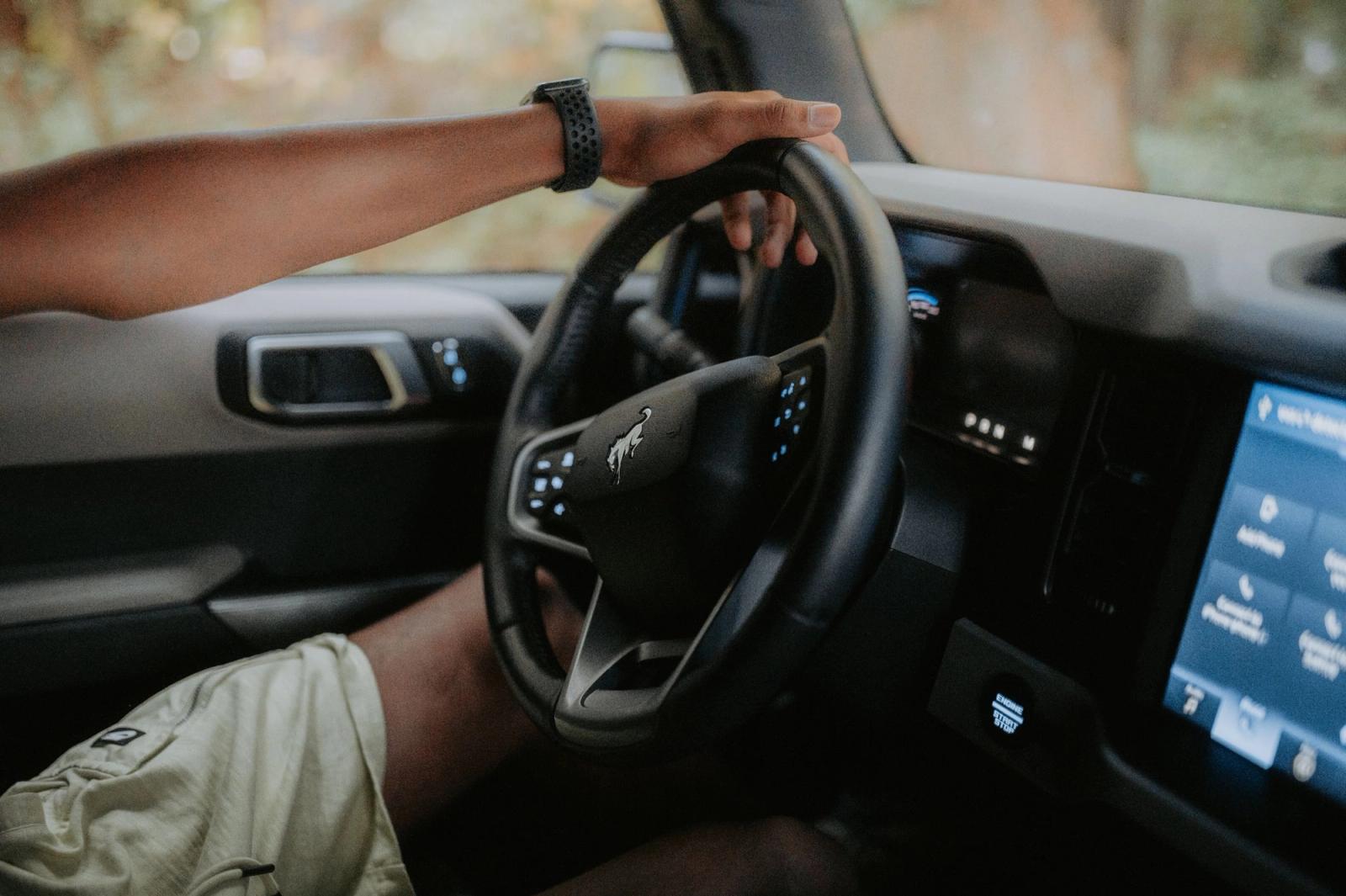
With a Virginia learner's permit, you can drive only with a licensed driver sitting beside you who is at least 21 (or at least 18 if it's your parent, legal guardian or sibling). You can't drive between midnight and 4 a.m., you can't carry more than one passenger under 21 who isn't family, and you can't hold a phone while driving. If you're under 18, you must keep the permit for at least nine months, finish driver education and log 45 hours of practice, 15 of them after sunset, before you can get your license.
Below is each rule in detail, with what changes if you're 18 or older. Everything here comes from the Virginia DMV, the Virginia Driver's Manual and the Code of Virginia.
Who can supervise you with a Virginia learner's permit?
The Code of Virginia (§ 46.2-335) says a permit holder may drive only when accompanied by one of these people:
- Any licensed driver 21 or older.
- Your parent or legal guardian.
- Your brother, sister, half-brother, half-sister, stepbrother or stepsister who is 18 or older.
The supervising driver also has to meet these conditions:
- Seat: They must sit beside you. The Virginia Driver's Manual says the front passenger seat.
- License: They must hold a valid driver's license and be legally allowed to drive that vehicle at that time.
- Attention: They must be alert and able to help you.
You must also have the permit with you whenever you drive. The law says the permit only works "while having the permit in his immediate possession."
If you want tips for the person in the passenger seat, see our guide on how to teach someone to drive.
Can you drive alone with a Virginia learner's permit?
No, with one exception. According to the DMV, you can drive with your permit without a licensed driver only if you meet all three of these:
- You hold a valid Virginia Driver Training Certificate (DTS B), signed by a parent or legal guardian, showing you finished both the classroom and behind-the-wheel parts of driver education.
- You're at least 16 years and 3 months old.
- You've held your learner's permit for nine months.
Under § 46.2-335, the permit plus that signed paperwork works as a temporary license until your permanent license arrives.
For how other states handle this, see can you drive alone with a learner's permit.
How many passengers can you have with a learner's permit in Virginia?
Under § 46.2-335, a learner's permit doesn't allow you to drive with more than one passenger under 21.
Two exceptions apply:
- Family and household members don't count. The law uses the same definition as the provisional license rules, which include your spouse, children, stepchildren, brothers, sisters, half-brothers, half-sisters and first cousins, among others.
- Driver education lessons. The limit doesn't apply while you're driving as part of an approved driver education program or a licensed driver training school course.
Note: the DMV's Teen Driving Restrictions page words the permit rule as "more than one passenger under age 18." The Code of Virginia, which is the actual law, says under 21. Following the under-21 limit keeps you within both.
Can you drive at night with a learner's permit in Virginia?
Yes, but not late at night. The Code of Virginia says no learner's permit allows its holder to drive between midnight and 4 a.m.
Driving after sunset but before midnight is allowed, and teens need 15 hours of it (more on that below).
You may see exceptions to the midnight curfew on the DMV's teen restrictions page, such as driving to or from work, a supervised school or civic activity, or an emergency. Those exceptions come from the law for drivers under 18 who already have a license (§ 46.2-334.01). The learner's permit section of the Code doesn't list any exceptions to the midnight to 4 a.m. rule.
For a state-by-state look, see can you drive at night with a learner's permit.
Can you use your phone while driving with a permit?
Not in your hand. Virginia law (§ 46.2-818.2) makes it illegal for any driver to hold a handheld personal communications device while driving a moving vehicle. The exceptions include being lawfully parked or stopped and using the phone to report an emergency. A first offense is a $125 fine and a second or later offense is $250. In a highway work zone, the fine is a mandatory $250.
The Virginia Driver's Manual adds that you can use a phone for navigation as long as you're not entering information or holding it while driving.
For teens, the DMV's Teen Driving Restrictions page goes further. It says the cell phone law prohibits using a phone while driving "regardless of whether such device is or is not hand-held," and that you can only use it for a driver emergency with the vehicle lawfully parked or stopped.
How long do you have to hold a learner's permit in Virginia?
It depends on your age.
Under 18: You must hold your learner's permit for at least nine months before you can get a driver's license. You also must finish a state-approved driver education program.
18 and older (before January 1, 2027): If you've never held a license from any state, U.S. territory or foreign country, you can choose one of two paths:
- Hold the permit for at least 60 days, or
- Complete a state-approved driver education program while holding the permit.
Starting January 1, 2027: The rules change for adults.
- Age 21 or older: Hold the permit for at least 60 days, or complete driver education while holding the permit. (Same as today.)
- Ages 18 through 20: Hold the permit for at least 90 days and complete a state-approved driver education program while holding the permit.
The DMV's FAQ on this change says that if you're 18 to 20, got your permit before January 1, 2027, and get your license after that date, you still need proof of an approved driver education program.
If you move to Virginia with a valid learner's permit from another state, the DMV counts the time you held it toward Virginia's minimum holding period.
To compare holding periods in other states, see how long do you have to have your permit. If you're starting as an adult, our guide to getting your license at 18 or older covers the general process.
How many supervised driving hours do you need in Virginia?
If you're under 18, you need at least 45 hours of driving, at least 15 of them after sunset, while holding your learner's permit. This comes from § 46.2-335 of the Code of Virginia.
Your parent, foster parent or legal guardian certifies those hours. They sign the driver education completion certificate and provide their driver's license or DMV ID card number. The form warns that giving false information is illegal and can be prosecuted, so the hours need to be real.
The 45-hour rule doesn't apply to married or emancipated minors.
Our driving log for teens shows what to track.
If you're 18 or older and choose the 60-day path (before 2027, or at 21+ after), there's no set number of hours. Instead, you complete the Behind-the-Wheel Checklist (DMV form CSMA 19). A licensed driver certifies on it that they were with you while you practiced and that you followed all the rules for learner's permit holders.
Do you need driver education in Virginia?
Under 18: yes, always. You need a Commonwealth of Virginia-approved driver education program. According to the DMV, the program includes:
- 36 classroom sessions
- 7 driving sessions
- 7 observation sessions
- A final road skills exam
Each session is 50 minutes. Anyone 15 years and 6 months or older can take the classroom part without a permit, but you need a learner's permit for the driving part. The classroom part can also be taken online through a driver training school.
Students under 18 also have a 90-minute parent/teen component in the classroom part. It covers topics such as the restrictions on young drivers and the dangers of driving while intoxicated. If you live in Planning District 8 (Arlington, Fairfax, Loudoun and Prince William counties, and the cities of Alexandria, Fairfax, Falls Church, Manassas and Manassas Park), you and a parent or guardian must complete it in person.
For under-18 drivers, the road skills test is given as part of the driver education course, according to the Virginia Driver's Manual.
18 and older: Driver education is optional before January 1, 2027 (if you hold the permit 60 days instead) and optional again at 21+ after that date. For ages 18 through 20, it becomes required on January 1, 2027.
One more detail: the driving school sends your completion certificate to the DMV. The DMV doesn't accept completion certificates directly from applicants.
What happens if you break a learner's permit rule in Virginia?
The Code of Virginia says any violation of § 46.2-335, the learner's permit law, is a Class 2 misdemeanor. That section includes the supervisor, passenger and midnight to 4 a.m. rules.
If you're 18 or older on the 60-day path, keep in mind that the licensed driver who signs your Behind-the-Wheel Checklist is certifying that you followed all the requirements for learner's permit holders.
How long is a Virginia learner's permit valid?
According to the DMV, a learner's permit that is not REAL ID compliant expires on your birthday and is valid for up to 8 years. A REAL ID compliant permit for someone temporarily authorized to be in the U.S. is valid for the length of their authorized stay, or one year if there is no definite end date.
The Code of Virginia also says a regular learner's permit stays valid until you get your driver's license or no longer qualify for a permit.
What's on the Virginia learner's permit test?
You must be at least 15 years and 6 months old to apply. To get the permit, you pass a vision screening and a two-part knowledge exam. According to the DMV:
- Part one, road signs: 10 questions, and you must get all 10 right.
- Part two, general knowledge: 30 questions, and you need at least 24 correct.
If you fail and you're under 18, you must wait 15 days before trying again. If you're 18 or older, you can test once a day. After three failed attempts, at any age, you must complete the classroom part of driver education before testing again.
Since one wrong answer on the signs part means a fail, study signs carefully. Our guide to road sign meanings is a good place to start, and you can take practice tests to study for your permit test on our Virginia permit practice test page. For other states, see all our permit practice tests.
Quick summary of Virginia learner's permit rules
- Supervisor: Licensed driver 21+, or your parent, legal guardian or sibling 18+, sitting beside you, alert and able to help.
- Passengers: No more than one passenger under 21, not counting family and household members.
- Night: No driving between midnight and 4 a.m.
- Phone: No holding a phone while driving. The DMV tells teens not to use a phone at all while driving.
- Holding period: 9 months if under 18. At 18+, 60 days or driver ed (until January 1, 2027). From January 1, 2027, ages 18 to 20 need 90 days and driver ed.
- Practice hours: 45 hours, 15 after sunset, certified by a parent or guardian if you're under 18.
- Driver ed: Required under 18, and for ages 18 to 20 starting January 1, 2027.
Once you have your license, new limits apply to drivers under 18. Our guide to the graduated driver license explains how those stages work.
Sources
- Apply for a Learner's Permit (Virginia DMV)
- Teen Driving Restrictions (Virginia DMV)
- Driver Education (Virginia DMV)
- Revised Learner's Permit Holding Period and Driver Education Requirements: FAQs (Virginia DMV)
- The Knowledge Exam (Virginia DMV)
- Virginia Driver's Manual (Virginia DMV)
- § 46.2-335. Learner's permits; fees; certification required (Code of Virginia)
- § 46.2-334.01. Licenses issued to persons less than 18 years old subject to certain restrictions (Code of Virginia)
- § 46.2-324.1. Requirements for initial licensure of certain applicants (Code of Virginia)
- § 46.2-818.2. Use of handheld personal communications devices in certain motor vehicles (Code of Virginia)
Free permit practice test for your state
Ready to check what you know? Take a free 10-question test from your state's driver handbook, with every answer explained. No sign-up needed. See questions and pass marks for every state.
- Alabama
- Alaska
- Arizona
- Arkansas
- California
- Colorado
- Connecticut
- Delaware
- Florida
- Georgia
- Hawaii
- Idaho
- Illinois
- Indiana
- Iowa
- Kansas
- Kentucky
- Louisiana
- Maine
- Maryland
- Massachusetts
- Michigan
- Minnesota
- Mississippi
- Missouri
- Montana
- Nebraska
- Nevada
- New Hampshire
- New Jersey
- New Mexico
- New York
- North Carolina
- North Dakota
- Ohio
- Oklahoma
- Oregon
- Pennsylvania
- Rhode Island
- South Carolina
- South Dakota
- Tennessee
- Texas
- Utah
- Vermont
- Virginia
- Washington
- West Virginia
- Wisconsin
- Wyoming