

How to Teach Someone to Drive: A Guide for Parents
Start in an empty lot, build skills in order, keep sessions short, agree on clear words like slow and stop, and log the supervised hours your state requires.
Bianca Galvan
Product & Content at GetMyPermit
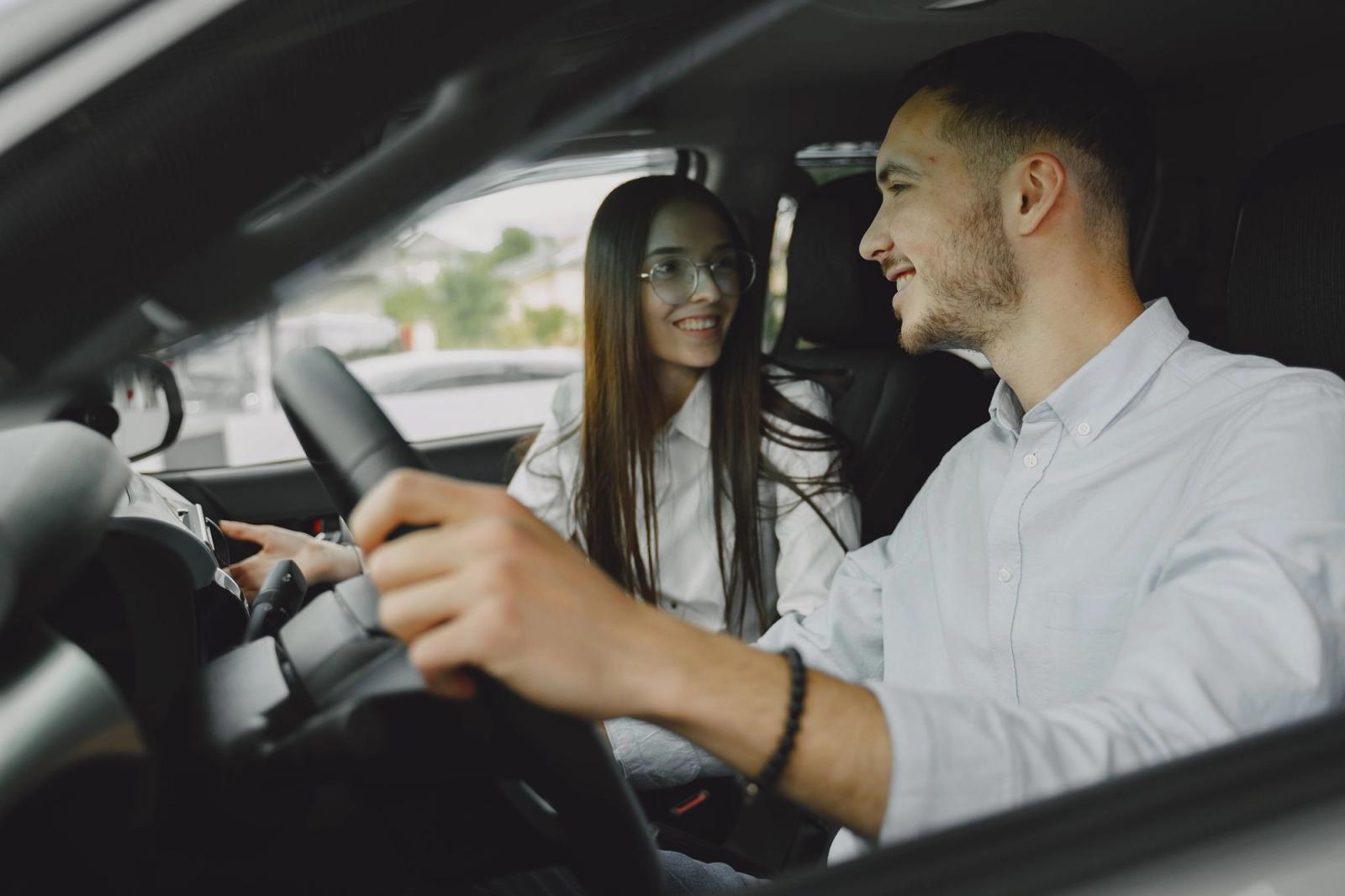
The best way to teach someone to drive is to start in an empty parking lot, build skills in a set order, and keep each session short. Before you pull out, agree on the exact words you will use, like "slow" and "stop," and give directions early. Stay calm, set a good example, and log the supervised hours your state requires, because many states ask a parent to certify those hours before the road test.
Below is a step-by-step plan based on the parent guides that state DMVs publish and on teen driving advice from NHTSA.
What should you do before the first drive?
A little prep makes the first lesson much easier.
- Learn your state's permit rules. Check who can ride along, how many hours your teen needs and whether any have to be at night. More on this below.
- Get to know the car together. Oregon's parent guide suggests going over every control and safety device with your teen, reading the vehicle manual together, and practicing with the controls while parked.
- Map the blind spots. With the engine off, have your teen sit in the driver's seat while you walk around the car. Mark the spots where they lose sight of you.
- Call your insurance company. When your teen gets a permit, contact your insurer to ask how it affects your policy.
- Set ground rules. NHTSA encourages parents to set rules early, like no phone use while driving and seat belts at all times. California and New York both publish a parent-teen driving contract you can fill out together.
Your teen also needs to know the rules of the road. That is what the written test covers, and you can help them get ready with a free permit practice test.
Who is allowed to supervise a new driver?
Each state sets its own rules for the person in the passenger seat. Here are three examples from official sources:
- California: A minor must practice with a California-licensed driver who is at least 25. That person must sit close enough to take control of the car if needed.
- Georgia: A Class CP permit holder can only drive with someone who is at least 21, licensed to drive a Class C vehicle, fit and able to take control, and sitting in the seat beside the driver.
- New York: The supervisor must be a licensed driver who is at least 21, with a license valid for the vehicle, seated in the front seat. In New York City and Long Island, junior permit holders generally must be supervised by a parent, guardian or another person on the state's list.
Georgia's DDS also notes that if neither parent has a valid license, a friend or relative can lead the practice sessions. For more on this topic, see can you drive alone with a learner's permit.
How many supervised hours does your state require?
Most states set a minimum number of practice hours, and many require some of them at night. A few examples:
- California: 50 hours, including 10 at night. A parent signs the permit to verify the training.
- Georgia: 40 hours, including 6 at night. A parent or guardian gives sworn verification that the hours were completed.
- New York: At least 50 hours, with at least 15 after sunset. A parent or guardian certifies the hours on form MV-262, which goes to the examiner each time your teen takes the road test.
- Oregon: 50 hours if your teen also completes an ODOT-approved driver education course, or 100 hours without one.
Write down every drive as it happens: date, length, day or night, and conditions. California and Oregon both offer free practice driving logs. Night hours often need planning, so read can you drive at night with a learner's permit before you start.
Hours are only part of it. Your state may also set a minimum time your teen must hold the permit, which we cover in how long do you have to have your permit.
How do you teach someone to drive, step by step?
Oregon's parent guide says to start in low-risk areas like empty parking lots or remote roads. Then move to quiet neighborhood streets, and later to busier roads and highways. Start in daylight and good weather, and add new roads, weather and times of day as skills grow. Georgia's 40-hour guide follows a similar path and stresses mastering each level before moving on.
A simple order to follow:
- Empty parking lot. Georgia's guide starts in a large, level lot with no obstacles. Cover seat and mirror setup, smooth starts, smooth stops, steering and turning.
- Quiet streets. Practice turns, stop signs and scanning at intersections in a calm neighborhood.
- Busier roads. Oregon suggests basic skills first (turning, parking, backing up) and then harder ones like changing lanes and merging.
- Highways. Move on to faster roads only when lane changes and merging feel easy.
- Night driving. Start on familiar roads so darkness is the only new thing.
- Bad weather. Practice in rain and other conditions with you in the car, so the first time isn't alone.
Before the road test, California's DMV suggests asking yourself if your teen has practiced in heavy city traffic, on freeways, in bad weather and at night.
How long should each practice session be?
Keep it short. Georgia's guide calls 30 minutes the best learning period for beginning drivers. Teach a new skill in the first part, then check how well it stuck.
Oregon's guide adds a few tips:
- Practice when you are both in a good mood, rested and not in a rush.
- Keep it to just you and your teen. Other passengers and pets distract both of you.
- Short sessions add up. Oregon points out that 50 hours is just over 15 minutes a day for six months.
If you are teaching two teens at once, like twins, give each one their own sessions instead of having the other ride along.
How do you give clear driving instructions?
Mixed signals are one of the most common problems. If you say "stop" when you mean "slow down," a new driver may slam the brakes.
- Agree on your words before you drive. Georgia's guide uses "slow" to coach the driver down to a stop, and later "slow to a stop" once that becomes a habit. Save "stop" for a hard, emergency stop. Talk through these words in the driveway first.
- Say where, then what. Georgia's guide gives the example "At the next intersection, turn right." The location comes first, so your teen has time to plan.
- Give directions early. Oregon's guide says to guide your teen through situations well before trouble starts, and to leave time for questions.
- Use a steady voice. Explain why and how in a soft, even tone. Don't assume your teen knows what you mean.
- Have your teen talk out loud. Georgia's guide has teens call out "clear left, clear right, clear ahead" at intersections, so you can hear what they notice.
How do you stay calm when your teen makes mistakes?
Mistakes are part of learning. Both Oregon and Georgia tell parents to stay patient and calm and to praise good driving often.
When something goes wrong:
- Have your teen pull over somewhere safe before you talk it through.
- Keep feedback short and specific. Georgia's guide says feedback should be precise and immediate.
- Walk through the maneuver step by step, then let your teen try it again on their own.
If you feel tense or tired, skip the session. A calm 20-minute drive teaches more than an hour of yelling.
Why does your own driving matter?
Your teen has been watching you drive for years. NHTSA says novice teen drivers most often learn from watching their parents, so your habits matter.
NHTSA's advice for parents:
- Keep your eyes on the road and your hands on the wheel.
- Don't use your phone while driving, and don't let your teen either.
- Never speed.
- Make sure your words match what you do behind the wheel.
Georgia's guide adds: always wear your seat belt and fix your own unsafe habits. NHTSA also reminds parents not to rely only on driver's ed. Your practice drives together matter too.
When is your teen ready for the road test?
They are ready when they can handle every type of road and condition calmly, not just when the hours are done. California's DMV suggests taking a long practice drive and checking your teen's driving against its Safe Driver Checklist to find weak spots.
Don't forget the written permit test, which covers the rules of the road from your state's driver handbook. If you live in California or Georgia, your teen can practice with our California permit practice test or Georgia permit practice test.
Choosing a car for your new driver? Our guide to the safest cars for teen drivers shows what to look for and how to check any car for free.
Sources
- California DMV: Teen Drivers
- California DMV: Driver Handbook, Getting an Instruction Permit and Driver's License
- California DMV: Supervised Driving Log (PDF)
- California DMV: Parent-Teen Driving Contract (PDF)
- Georgia DDS: Learner's Permit
- Georgia DDS: Parenting the Driving Experience
- Georgia DDS: 40-Hour Parent/Teen Driving Guide, Introduction
- Georgia DDS: 40-Hour Parent/Teen Driving Guide, Sessions 1 & 2
- New York DMV: Driver's Manual, Chapter 1: Driver Licenses
- New York DMV: Information for Parents
- Oregon DMV: Online Parent Guide to Teen Driving, Introduction
- Oregon DMV: Online Parent Guide, Supervise Your Teen Driver
- Oregon DMV: Online Parent Guide, Before You Even Begin
- NHTSA: Teen Driving
Free permit practice test for your state
Ready to check what you know? Take a free 10-question test from your state's driver handbook, with every answer explained. No sign-up needed. See questions and pass marks for every state.
- Alabama
- Alaska
- Arizona
- Arkansas
- California
- Colorado
- Connecticut
- Delaware
- Florida
- Georgia
- Hawaii
- Idaho
- Illinois
- Indiana
- Iowa
- Kansas
- Kentucky
- Louisiana
- Maine
- Maryland
- Massachusetts
- Michigan
- Minnesota
- Mississippi
- Missouri
- Montana
- Nebraska
- Nevada
- New Hampshire
- New Jersey
- New Mexico
- New York
- North Carolina
- North Dakota
- Ohio
- Oklahoma
- Oregon
- Pennsylvania
- Rhode Island
- South Carolina
- South Dakota
- Tennessee
- Texas
- Utah
- Vermont
- Virginia
- Washington
- West Virginia
- Wisconsin
- Wyoming