

Basic Speed Law: What It Means in California
California's Basic Speed Law says you may never drive faster than is safe for current conditions, even if you are under the posted speed limit.
Bianca Galvan
Product & Content at GetMyPermit
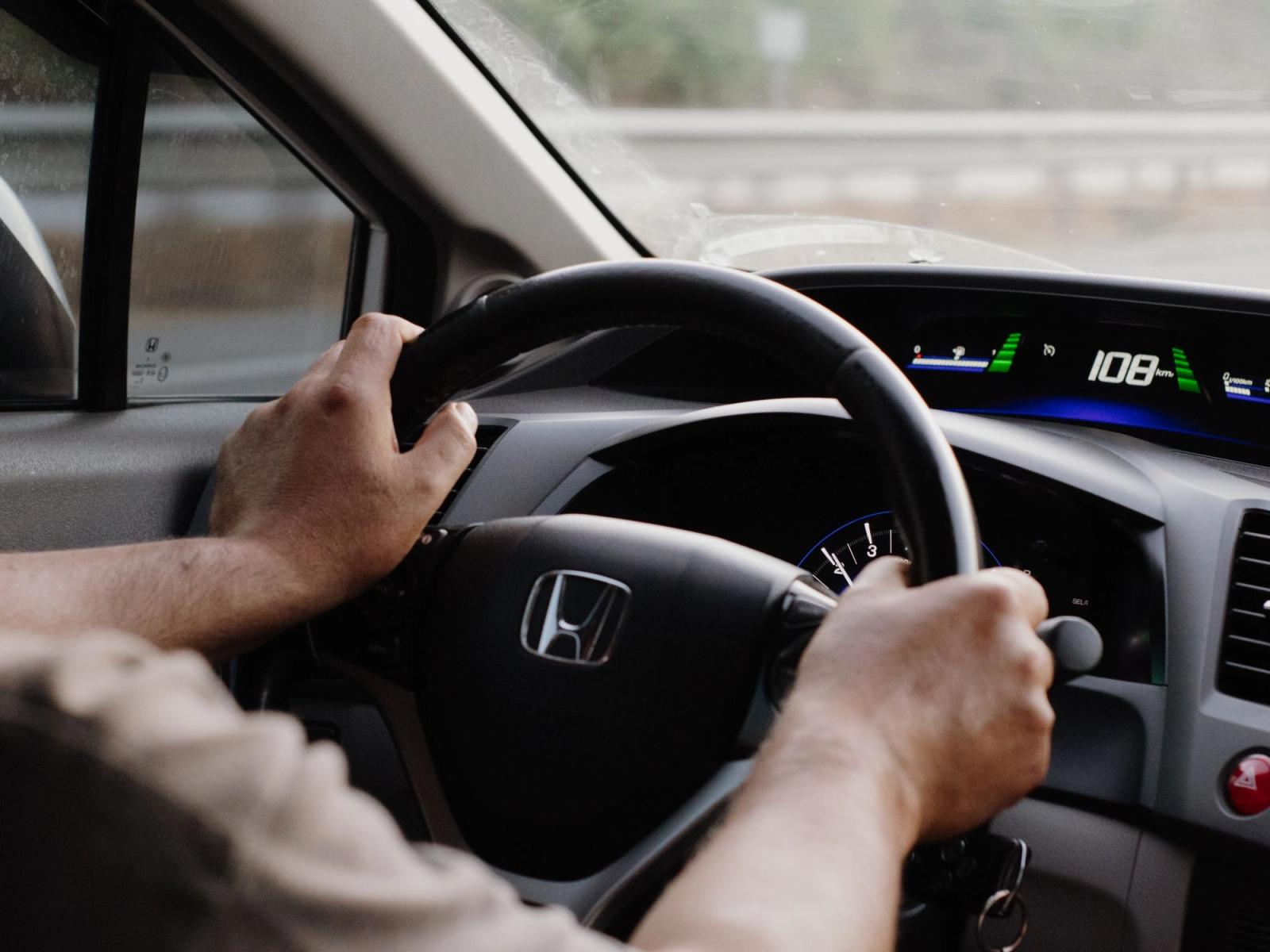
California's Basic Speed Law says you may never drive faster than is safe for the current conditions. That means the posted speed limit is not a guaranteed safe speed. If rain, fog, traffic or a narrow road make the limit too fast, you have to slow down, and you can get a ticket even while driving at or under the number on the sign.
The rule is in California Vehicle Code Section 22350, and it is one of the speed questions the DMV puts on its sample knowledge tests. Here is what it says, how it fits with the other speed limits in California, and how to answer it on your permit test.
What does the Basic Speed Law say?
The law itself is one sentence. California Vehicle Code Section 22350 says no person shall drive a vehicle on a highway "at a speed greater than is reasonable or prudent," having regard for:
- Weather
- Visibility
- The traffic on the highway
- The surface and width of the highway
It also says you may never drive at a speed that endangers the safety of people or property.
The California Driver's Handbook puts it in plain words: "In California, you may never drive faster than is safe for the current road conditions. This is known as the Basic Speed Law."
What conditions does the handbook say you should watch?
The handbook says that, regardless of the posted speed limit, your speed should depend on:
- The number of vehicles on the road.
- The speed of other vehicles on the road.
- The road surface: smooth, rough, graveled, wet, dry, wide or narrow.
- Bicyclists or pedestrians on or crossing the road.
- Weather: rain, fog, snow, wind or dust.
- Traffic congestion. The handbook adds that small changes in your habits, like not weaving in and out of freeway lanes, can help reduce congestion.
In its section on heavy traffic and bad weather, the handbook says: "You must drive slower when there is heavy traffic or bad weather." It also warns that if you drive faster or slower than the speed limit, you may be cited.
Can you get a ticket for driving the speed limit in California?
Yes. This is the part of the Basic Speed Law that surprises most new drivers. The posted limit is the most you may drive when conditions are good. It is not a speed you are always allowed to drive.
Some everyday examples of what that looks like:
- Heavy rain on the freeway. The sign says 65 mph, but you can barely see the car ahead. Driving 65 can break the Basic Speed Law.
- Fog on a two-lane road. Visibility is one of the conditions named in Section 22350, so you need to slow to a speed where you can stop for what you can see.
- A busy street with pedestrians and bicyclists. People on or crossing the road are on the handbook's list of reasons to slow down.
- A gravel or narrow road. The surface and width of the road are both in the law.
What are prima facie speed limits?
California also has a set of default speed limits that apply in certain places even when no number is posted. The Vehicle Code calls them "prima facie" limits, and they are listed in Section 22352. Going over one of them is presumed to be unlawful, as explained below.
These are the prima facie limits from Section 22352, with how the handbook describes each one:
- Alleys: 15 mph. The handbook defines an alley as a road no wider than 25 feet used to reach the back or side entrances of buildings.
- Blind intersections: 15 mph. The handbook says an intersection is blind if it has no stop signs at any corner. The law describes it as an intersection where, in the last 100 feet of your approach, you can't see traffic on the crossing roads for 100 feet, and it doesn't apply when the intersection has stop signs, yield signs or traffic signals. The handbook adds that if your view is blocked, you should move slowly forward until you can see.
- Railroad crossings: 15 mph within 100 feet of the crossing when you can't see the tracks for 400 feet in both directions. You may go faster than 15 mph if the crossing is controlled by gates, a warning signal or a flagger.
- Business or residential districts: 25 mph, unless a different limit is posted.
- School zones: 25 mph. The handbook says the limit is 25 mph within 500 feet of a school while children are outside or crossing the street, and some school zones may have limits as low as 15 mph. The law ties this limit to a posted "SCHOOL" warning sign.
- Senior zones: 25 mph when passing a senior center or similar facility on a street posted with a "SENIOR" warning sign (this one is in the law, not in the handbook).
Section 22352 also says these limits can be changed as the Vehicle Code allows, but only when signs are put up to show the new limit.
How does the Basic Speed Law work with prima facie limits?
California Vehicle Code Section 22351 connects the two:
- Driving at or under a prima facie limit is lawful unless it is "clearly proved" that you broke the Basic Speed Law. So 25 mph in a residential area is legal on a clear day, but it can still be a violation if conditions made it unsafe.
- Driving over a prima facie limit is presumed unlawful. Section 22351 lets a driver argue, with "competent evidence," that the higher speed did not break the Basic Speed Law at that time and place. In other words, the burden shifts to the driver.
For a new driver, the safe takeaway is simple: treat the prima facie limits as the most you should drive in those places, and slow down below them when conditions call for it.
How is that different from the 65 mph and 55 mph limits?
The statewide maximum limits work differently. California Vehicle Code Section 22349 says no person may drive on a highway faster than 65 mph, with an exception set out in another section of the code. It also says no person may drive faster than 55 mph on a two-lane, undivided highway unless a higher speed has been posted for that road based on an engineering and traffic survey.
The law defines a two-lane, undivided highway as one with no more than one through lane in each direction, and passing lanes don't count.
The handbook sums it up this way: unless otherwise posted, the maximum speed limit on most California highways is 65 mph, and it is 55 mph on a two-lane undivided highway and for vehicles towing trailers.
Unlike the prima facie limits, Section 22349 is written as a flat "no person may drive" rule. The Basic Speed Law sits on top of it: even on a 65 mph freeway, you must go slower when conditions require it.
What do posted speed limit signs mean?
A Speed Limit sign is a regulatory sign, which means it is a rule you must follow, not just advice. Under the federal Manual on Uniform Traffic Control Devices (MUTCD), the Speed Limit (R2-1) sign shows the limit set by law, ordinance, regulation, or by the responsible agency based on an engineering study, and the limit is shown in multiples of 5 mph.
The Basic Speed Law is why the sign is a ceiling and not a target. You can read more about this kind of sign in our guide to regulatory signs. Yellow signs like curve or slippery road warnings are a different family, covered in our post on warning signs.
Can you get a ticket for driving too slowly?
Yes. The Basic Speed Law is about not driving too fast for conditions, but California also has a rule against blocking traffic. Vehicle Code Section 22400 says no person shall drive so slowly that they "impede or block the normal and reasonable movement of traffic," unless the slower speed is needed for safety, because of a grade, or to follow the law. It also lets the California Department of Transportation set a posted minimum speed on parts of state highways where slow drivers consistently hold up traffic.
The handbook says the same thing in its section on heavy traffic and bad weather: you should not block normal and reasonable traffic flow by driving too slowly. If another driver is close behind you and wants to go faster, move to the right. If you choose to drive slower than other traffic, use the right lane.
How does the Basic Speed Law show up on the California permit test?
The DMV says all knowledge test questions are taken from the California Driver's Handbook, and that there are no "trick questions." Each question has one correct answer. Speed questions on the DMV's own sample tests look like this:
- "Which of the following is a requirement of California's Basic Speed Law?" The choices are "Always drive the speed limit, regardless of conditions," "Match your speed to that of your surrounding traffic" and "Never drive faster than is safe for current conditions." The last choice is the one that matches the handbook's definition.
- "When you are driving the speed limit, you can be given a speeding ticket:" The choice that matches the Basic Speed Law is "If road or weather conditions require a slower speed."
- "A highway has a posted speed limit of 65 mph. What does this mean?" The choices are "You must always drive 65 mph on that highway," "You may drive faster only if there are no other vehicles" and "You must drive 65 mph only if driving conditions are ideal." The trap is thinking 65 is a speed you must or may always drive. Under the Basic Speed Law, 65 is the most you may drive, and only when conditions allow it.
- "When a railroad crossing is not controlled, what is the speed limit when you are within 100 feet and cannot see for 400 feet in both directions?" The handbook's answer is 15 mph.
A quick way to handle these on test day:
- If an answer says "always drive the limit" or "the limit is always legal," it is wrong. The Basic Speed Law always comes first.
- If an answer says "never faster than is safe for conditions," it is almost always the right one.
- Memorize the small numbers: 15 mph for alleys, blind intersections and uncontrolled railroad crossings, and 25 mph for business and residential districts and school zones, unless a sign says otherwise.
- Remember the big numbers: 65 mph on most highways and 55 mph on two-lane undivided highways and when towing a trailer, unless posted otherwise.
For more examples, see the California permit test questions people miss most and our overview of what questions are on the permit test.
How can you study speed rules before your test?
Read the speed parts of the handbook (the "Manage Your Speed" part of Section 8 and the special speed limits near the end of Section 7), then test yourself until you can answer without thinking. Practice questions are the fastest way to see whether the numbers and the Basic Speed Law idea have really stuck.
You can study with our California permit practice tests, or browse permit practice tests for every state. If you're short on time, our guide on how to study for the permit test has a plan for the week before your test. Once you have your permit, the California learner's permit rules explain what you can and can't do while you practice driving.
Sources
- California Vehicle Code Section 22350 (California Legislative Information)
- California Vehicle Code Section 22351 (California Legislative Information)
- California Vehicle Code Section 22352 (California Legislative Information)
- California Vehicle Code Section 22349 (California Legislative Information)
- California Vehicle Code Section 22400 (California Legislative Information)
- Section 8: Safe Driving (Continued), California Driver's Handbook (California DMV)
- Section 7: Laws and Rules of the Road (Continued), California Driver's Handbook (California DMV)
- Prepare for Knowledge and Drive Tests (California DMV)
- Sample Class C Drivers Written Test 1 (California DMV)
- Sample Class C Drivers Written Test 3 (California DMV)
- Sample Class C Written Test 4 (California DMV)
- Manual on Uniform Traffic Control Devices, Chapter 2B: Regulatory Signs (FHWA)
Free permit practice test for your state
Ready to check what you know? Take a free 10-question test from your state's driver handbook, with every answer explained. No sign-up needed. See questions and pass marks for every state.
- Alabama
- Alaska
- Arizona
- Arkansas
- California
- Colorado
- Connecticut
- Delaware
- Florida
- Georgia
- Hawaii
- Idaho
- Illinois
- Indiana
- Iowa
- Kansas
- Kentucky
- Louisiana
- Maine
- Maryland
- Massachusetts
- Michigan
- Minnesota
- Mississippi
- Missouri
- Montana
- Nebraska
- Nevada
- New Hampshire
- New Jersey
- New Mexico
- New York
- North Carolina
- North Dakota
- Ohio
- Oklahoma
- Oregon
- Pennsylvania
- Rhode Island
- South Carolina
- South Dakota
- Tennessee
- Texas
- Utah
- Vermont
- Virginia
- Washington
- West Virginia
- Wisconsin
- Wyoming