

Can Police Pull You Over for No Reason, Just to Check Your License?
Generally no. Police can't stop a car at random just to check a license, but even a minor traffic violation is enough reason, and checkpoints are different.
Bianca Galvan
Product & Content at GetMyPermit
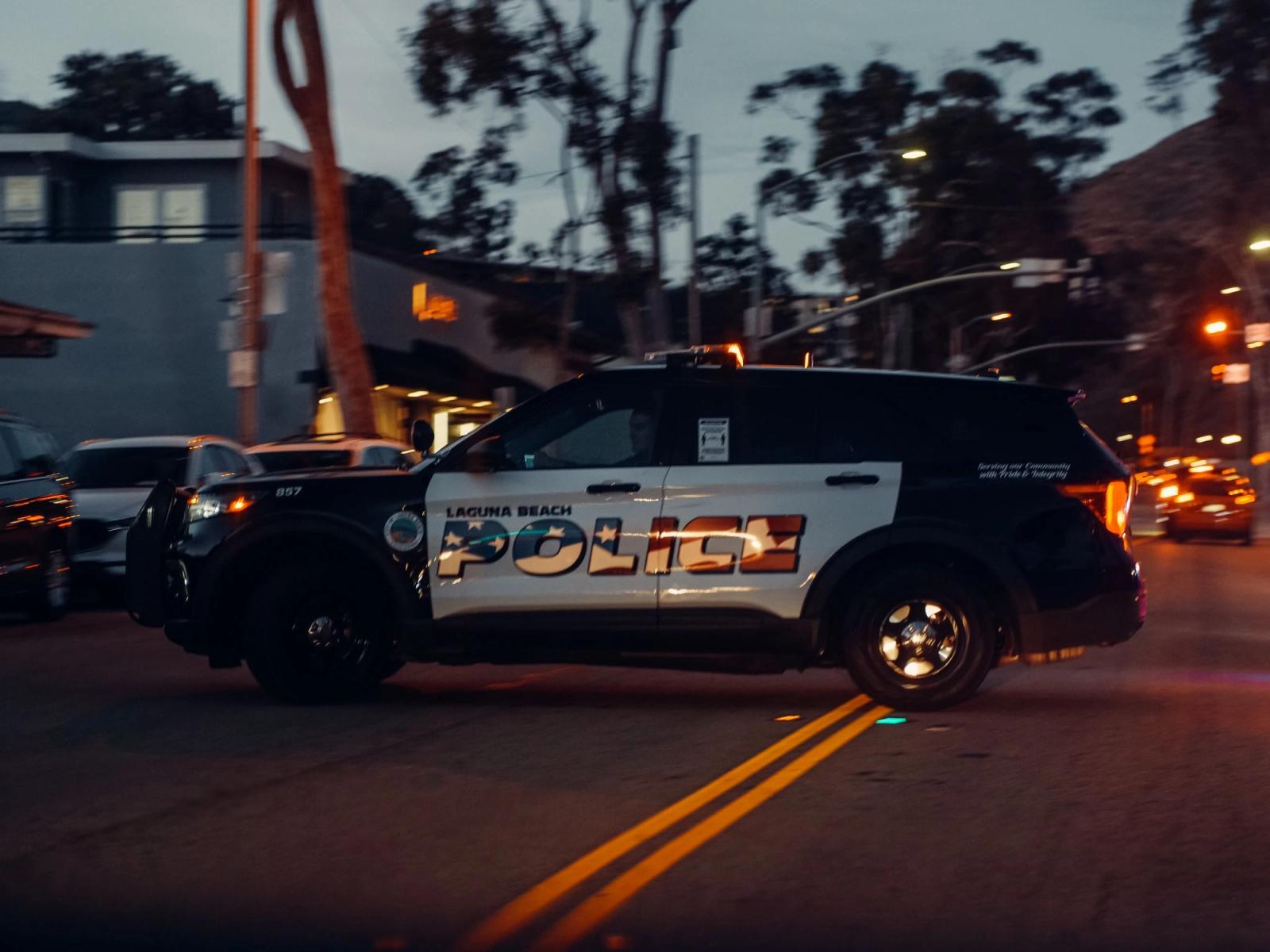
Generally, no. In Delaware v. Prouse (1979), the U.S. Supreme Court ruled that police can't stop a single car at random just to check the driver's license and registration. They need at least a reasonable suspicion that you're breaking the law. That reason can be small, like a missed turn signal, and sobriety checkpoints that stop every car follow different rules.
This is a plain explanation of how it works, not legal advice. Your state's laws and courts can add more protection, so check your state's rules for the details.
What did the Supreme Court decide in Delaware v. Prouse?
The case started with an ordinary stop in Delaware. A patrol officer pulled over a car even though, by his own testimony, he had seen no traffic or equipment violation and nothing suspicious. He stopped it only to check the driver's license and the car's registration. He wasn't following any department rules for spot checks. In his words, he "saw the car in the area" and decided to pull it over.
The Supreme Court said that stop broke the Fourth Amendment, which protects against unreasonable searches and seizures. The main points:
- A traffic stop is a "seizure." Stopping a car and holding the people inside counts as a seizure under the Fourth Amendment, even if the stop is short and has a limited purpose.
- Random license checks aren't allowed. Unless there's at least "articulable and reasonable suspicion" that the driver is unlicensed, the car isn't registered, or someone in it is breaking the law, stopping a car just to check documents is unreasonable.
- Driving doesn't erase your privacy. The Court said people don't lose all their Fourth Amendment protection just because cars are regulated by the government.
The Court also explained why random checks add little. The main way police enforce traffic laws is by acting on violations they see. Stops for traffic violations happen countless times a day, and during those stops licenses and registrations get checked anyway.
So when can police pull you over?
Police need a reason tied to the law. The Supreme Court made that clear again in Whren v. United States (1996). It held that stopping a driver is reasonable when officers have probable cause to believe a traffic violation happened.
In Whren, officers saw a truck wait at a stop sign for an unusually long time, then turn suddenly without signaling and speed off. That was enough. The Court also said an officer's other motives don't make the stop illegal if the traffic violation was real. In other words, if you break a traffic law, an officer can stop you for it, even if they were also curious about something else.
That's why "no reason" stops are rare in practice. Many everyday mistakes are traffic violations that give an officer a valid reason, such as:
- Turning or changing lanes without signaling
- Speeding, or driving at a speed that isn't reasonable for the conditions
- Not wearing a seat belt where it's a primary offense. The New York Driver's Manual calls New York a "primary enforcement" state, meaning an officer can give you a ticket for failing to wear a seat belt.
- Not stopping when an officer signals you to. New York's manual says directions from traffic officers take precedence over signs, signals and pavement markings.
Once you're stopped for a real reason, the officer can ask for your license, registration and insurance. California's handbook says the driver of a stopped vehicle must produce all three.
Are sobriety checkpoints legal?
Yes, under federal law. In Michigan Department of State Police v. Sitz (1990), the Supreme Court held that a state's highway sobriety checkpoint program is consistent with the Fourth Amendment.
Checkpoints are different from random stops because they don't leave it up to one officer to pick a car. Prouse itself said states could develop spot checks that are less intrusive or don't depend on an officer's unchecked choice, and named "questioning of all oncoming traffic at roadblock-type stops" as one possible option.
Here's how the Michigan checkpoint in Sitz worked, according to the opinion:
- Checkpoints were set up at selected sites along state roads, under written guidelines.
- Every vehicle going through was stopped, and drivers were briefly checked for signs of intoxication.
- If an officer saw signs of intoxication, the driver was moved out of traffic, where an officer checked the license and registration and could do more sobriety tests.
- Everyone else could continue right away.
At the only checkpoint run under the program, 126 vehicles went through in 75 minutes, and the average delay was about 25 seconds. Two drivers were held for field sobriety testing and one was arrested for driving under the influence. A third driver who went through without stopping was pulled over and arrested.
The Court weighed the state's interest in stopping drunk driving, how well checkpoints serve that goal, and how small the intrusion is for drivers who are stopped briefly. It decided the balance favored the program. The ruling covered only the first brief stop and questions. The Court noted that holding a particular driver for more extensive sobriety testing may require individual suspicion.
Can a state ban sobriety checkpoints?
Yes. Sitz only answered the federal question. States can give drivers more protection under their own constitutions.
Michigan is the clearest example. When the same case went back to state court, the Michigan Supreme Court held in 1993 that sobriety checkpoints violate the Michigan Constitution, because it protects against warrantless seizures more than the federal Constitution does. So even though the U.S. Supreme Court allowed them, sobriety checkpoints break Michigan's own constitution. More on Michigan's permit test.
Other states also limit or don't use checkpoints, but we weren't able to confirm a current official list. If you want to know whether checkpoints happen where you live, check with your state's highway patrol or state police.
What should you do if you're pulled over?
State driver handbooks give very similar advice. Here's what three of them say.
California
The California Driver Handbook lists these steps during a law enforcement stop:
- Turn on your right turn signal to show the officer you see them.
- Move completely onto the right shoulder, even if you're in the carpool/HOV lane. Stop in a well-lit area when possible.
- Turn off your radio.
- Stay inside your vehicle unless the officer tells you to get out.
- Roll down your window after you stop and before the officer reaches you.
- The driver and all passengers should put their hands in clear view before the officer makes contact.
The handbook also explains a few rights and duties:
- The reason for the stop. California officers must state the reason for a traffic stop before asking questions about a crime or traffic violation, unless they reasonably believe holding it back is needed to protect life or property from an imminent threat.
- Searches. If an officer asks to search your vehicle, you can say no. But the officer may still have legal authority to search, and you don't have a right to resist or obstruct them.
- Documents. The driver must show a license, proof of insurance and registration.
- Getting out or staying in. An officer can legally require the driver and passengers to get out or stay inside. If you're told to, you must do it.
- Recording. In general, the First Amendment protects recording police in public, as long as you don't interfere. Say right away that you're recording.
- If you think your rights were violated. You can say you object, but you should not physically resist. You can file a complaint with the officer's agency afterward.
More on California's permit test.
Virginia
The Virginia Driver's Manual has a "Traffic Stops" section. Its advice:
- Stay calm. Pull over to the side of the road in a safe place and park.
- Stay in your vehicle unless the officer asks you to get out.
- Turn on your flashers. At night, turn on your interior lights.
- Turn off your engine, radio and anything else that could make it hard to talk with the officer.
- Roll down your window. The officer may come to the driver or passenger side.
- Keep your seat belt on and ask passengers to keep theirs on.
- Keep your hands in plain view, preferably on the steering wheel, and ask passengers to do the same.
- Don't make movements that look like you're hiding or reaching for something.
- If the officer asks for your license, registration and insurance, say where they are and reach for them slowly, keeping one hand on the wheel.
- If the officer is in an unmarked car or not in uniform, you may ask to see their identification.
- If you disagree, don't argue at the roadside. You'll have your chance in court.
The manual also says to sign the citation if you're given one. Signing is not an admission of guilt, and refusing to sign may lead to arrest. More on Virginia's permit test.
New York
The New York manual doesn't have a step-by-step stop section, but it covers a few related rules:
- Officer directions come first. If a traffic officer signals you to stop at a green light, you must stop.
- Insurance card. Your insurer gives you two insurance ID cards. One is used to register the vehicle, and the other stays in the vehicle.
- Junior license holders. If you drive alone between home and work or school with a junior license, you must carry proof of employment or enrollment. It has to include contact details so a magistrate or police officer can verify it.
More on New York's permit test.
What about stops for emergency vehicles and fleeing?
Being pulled over is different from pulling over to let an emergency vehicle pass. California's handbook says to give the right-of-way to any law enforcement vehicle, fire engine or ambulance using a siren and red lights by driving to the right edge of the road and stopping until it passes. Our right of way rules guide covers that in more detail.
Ignoring an officer's signal to stop is serious. California's handbook says using a vehicle to flee or try to evade law enforcement is a misdemeanor, with much heavier penalties if someone is hurt or killed during a pursuit. Virginia's manual says that if you don't obey an officer's signal to stop and the officer is killed as a direct result of the pursuit, you're guilty of a Class 4 felony.
What does this mean for new drivers?
If you're learning to drive, the takeaway is simple:
- Police generally can't stop you at random just to see your license.
- They can stop you for any real traffic violation, even a small one.
- Checkpoints that stop every car are allowed under federal law, but your state may not use them.
- If you are stopped, stay calm, keep your hands visible and follow your state's handbook steps.
If you're driving on a learner's permit, the rules on who must ride with you depend on your state. See Can You Drive Alone With a Learner's Permit?. And if you're driving on a license from another country, read Can You Drive in the US With a Foreign Driver's License?
Officer signals can come up on the permit test too. New York's manual includes a practice question asking which you must obey over the others: a steady red light, a flashing red light, a STOP sign or a police officer. You can use our practice tests to study for your permit test.
Sources
- Delaware v. Prouse, 440 U.S. 648 (1979) (Library of Congress, U.S. Reports)
- Whren v. United States, 517 U.S. 806 (1996) (Library of Congress, U.S. Reports)
- Michigan Dept. of State Police v. Sitz, 496 U.S. 444 (1990) (Library of Congress, U.S. Reports)
- Criminal Proceedings Benchbook, 11.7 Location of the Search (Michigan Courts)
- California Driver Handbook, Section 6: Navigating the Roads (Continued) (California DMV)
- California Driver Handbook, Section 7: Laws and Rules of the Road (Continued) (California DMV)
- California Driver Handbook, Section 7: Laws and Rules of the Road (Continued) (California DMV)
- Virginia Driver's Manual (Virginia DMV)
- New York State Driver's Manual, Chapter 4: Traffic Control (NY DMV)
- New York State Driver's Manual, Chapter 8: Defensive Driving (NY DMV)
- New York State Driver's Manual and Practice Tests, full manual (NY DMV)
Free permit practice test for your state
Ready to check what you know? Take a free 10-question test from your state's driver handbook, with every answer explained. No sign-up needed. See questions and pass marks for every state.
- Alabama
- Alaska
- Arizona
- Arkansas
- California
- Colorado
- Connecticut
- Delaware
- Florida
- Georgia
- Hawaii
- Idaho
- Illinois
- Indiana
- Iowa
- Kansas
- Kentucky
- Louisiana
- Maine
- Maryland
- Massachusetts
- Michigan
- Minnesota
- Mississippi
- Missouri
- Montana
- Nebraska
- Nevada
- New Hampshire
- New Jersey
- New Mexico
- New York
- North Carolina
- North Dakota
- Ohio
- Oklahoma
- Oregon
- Pennsylvania
- Rhode Island
- South Carolina
- South Dakota
- Tennessee
- Texas
- Utah
- Vermont
- Virginia
- Washington
- West Virginia
- Wisconsin
- Wyoming