

What Driving Test Do I Need to Take? Permit Test vs. Road Test
Most new US drivers take a vision test and a written permit test first, then a road test later. Here is the order and how it changes for teens and adults.
Bianca Galvan
Product & Content at GetMyPermit
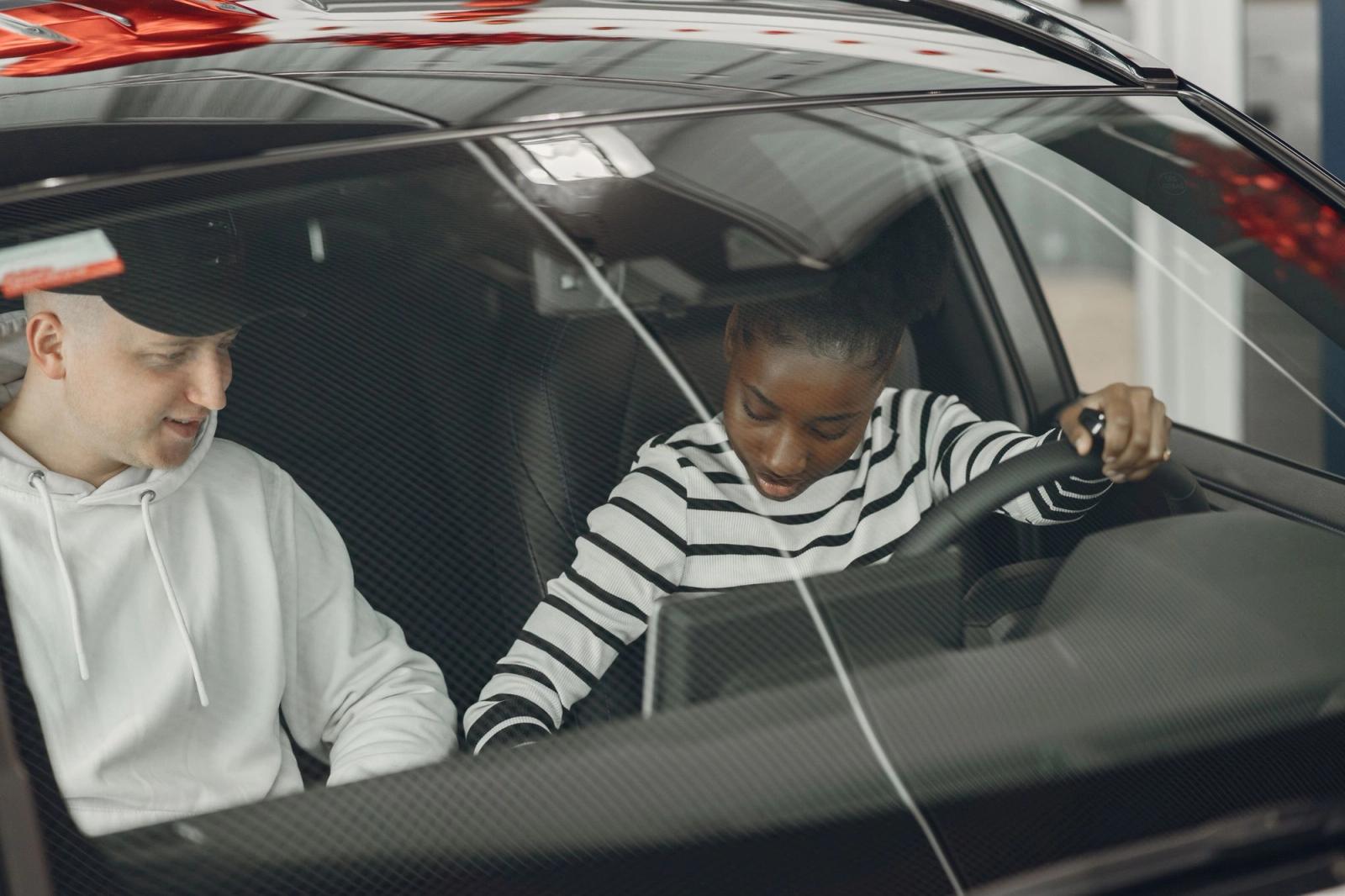
If you have never had a driver's license, you will usually take three tests: a vision screening, a written knowledge test (the "permit test"), and a road test. The first two get you a learner permit. The road test comes later and gets you the actual license.
The details depend on your state, your age and whether you already hold a license somewhere else. Here is how it works, with examples from official state sources.
What tests do you take to get a driver's license?
Most states use the same basic order for a first-time car license:
- Vision screening. A quick eye check at the licensing office.
- Written knowledge test. Multiple-choice questions on traffic laws, safe driving and road signs. Passing it (plus the vision check) usually gets you a learner permit.
- Road test. A driving test with an examiner, taken after you have practiced with your permit.
California is a clear example. To get an instruction permit, you must pass a vision exam and a knowledge test based on the California Driver's Handbook. The passing score is 80%. The driving test comes later and needs an appointment.
Georgia lists the same three exams for a first Class C license: a vision exam, a knowledge exam and a road skills test.
What is on the permit test?
The permit test checks that you know the rules before you drive on public roads. Questions come from your state's driver handbook.
Many states test road signs as their own part. For example:
- Georgia splits the knowledge exam into two tests, Road Rules and Road Signs. You need at least 15 out of 20 on each one.
- New York asks 20 questions. You must get at least 14 right, and at least 2 of the 4 road sign questions must be correct.
- North Carolina lists a knowledge test and a separate road sign recognition test, along with the vision test.
So if your state has a signs section, you can't make up for a weak signs score with a strong rules score. Study both.
Signs and pavement markings across the US follow one federal standard, the Manual on Uniform Traffic Control Devices (MUTCD) published by the Federal Highway Administration. That's why a sign's shape and color mean the same thing in every state, and why learning them once pays off on both tests.
If you want to see what these questions look like, try a free permit practice test.
How hard is the vision test?
It is a basic eyesight check, not a full eye exam. You can usually wear your glasses or contacts.
The standard varies. New York requires 20/40 vision in at least one eye, with or without corrective lenses. Georgia requires at least 20/60 in one eye, with or without lenses, plus a 140-degree field of vision. If you don't pass, the office may ask for a form from your eye doctor.
What happens on the road test?
The road test shows an examiner that you can drive safely in real traffic. You bring a car that meets your state's rules. Georgia, for example, requires a vehicle with valid liability insurance, registration and a safety inspection, and a score of at least 75% to pass.
Some states add steps before you can book it. In New York, most drivers must finish an approved 5-hour pre-licensing course (or a high school or college driver education course) before they can schedule a road test.
Where you take the test is also changing in some states. North Carolina now lets certified private driver education schools give the road test, first for teens and, since March 16, 2026, for adults 18 and older getting their first Class C license. You can still test at an NCDMV office.
Do teens and adults take different tests?
The tests themselves are mostly the same. What changes is everything around them. Teens go through graduated driver licensing (GDL), which adds a required waiting period, practice hours and often driver education before the road test.
Here is how that looks in a few states:
- California (under 18): You need driver education to get the permit. Before the driving test, you must hold the permit for at least six months, complete six hours of professional driver training and log 50 hours of practice, including 10 at night.
- New York (under 18): You must wait at least 6 months from the day you got your learner permit before you can schedule your road test. The New York DMV does not list this wait for applicants 18 and older.
- North Carolina (15 to 17): Teens get a Level 1 Limited Learner Permit. To take the road test for a Level 2 Limited Provisional License, they must hold the permit for 9 months and log at least 60 hours of driving.
Adults often have a shorter path. In North Carolina, people 18 and older can apply for a learner permit or go straight to applying for a driver's license. Adults still take the knowledge, road sign, vision and road tests.
What if you already have a license from another state?
This is the biggest exception. If you move to a new state with a valid license, you usually don't have to take a road test again. You may also skip the written test, depending on the state.
- Georgia: If your out-of-state license is valid (or expired no more than 2 years), you must pass a vision exam, but you are not required to take the written knowledge test or road test. If it expired more than 2 years ago, you take all three.
- New York: You turn in your out-of-state license and pass the vision test. If that license was valid for less than six months, or expired more than one year ago, you must also pass the written and road tests and complete the safe driving course.
- California: Drivers with a license from another state pass a vision exam and the required knowledge tests. California's page lists a driving test only for people licensed in another country.
- North Carolina: Written and road tests may be waived if you have a valid license from another state.
Licenses from other countries are treated differently. New York, for example, requires new residents licensed outside the US and Canada to pass the written and road tests and complete the safe driving course.
What about motorcycle and CDL tests?
These are separate licenses with their own tests. A quick look:
- Motorcycle (Class M): You take a motorcycle knowledge test and a riding skills test, but a training course can sometimes replace the skills test. In California, riders over 21 can show a motorcycle training course certificate instead of taking the DMV riding test. Riders under 21 must hold a permit for at least six months and complete the California Motorcyclist Training Course.
- Commercial (CDL): You start with a commercial learner's permit (CLP) by passing knowledge tests. In California, you must hold the CLP for 14 days before applying for the skills test. Many new Class A and B applicants must also finish Entry Level Driver Training (ELDT) first. The skills test has three parts: a vehicle inspection, a basic control skills test and a road test.
How to know exactly which tests you need
Start with your state's official licensing agency website (DMV, DPS, MVD or BMV). Look for the page that matches your situation: first-time teen, first-time adult, new resident or foreign license holder. Then:
- Read the official driver handbook. The permit test comes from it.
- Check whether your state tests road signs as a separate section.
- Note any wait time, practice hours or course you need before the road test.
- Practice with sample questions for your state, such as the California, Georgia, New York or North Carolina practice tests.
Pass the permit test first, get your practice hours in, and the road test will feel much less stressful.
Coming from another country? See whether you can drive in the US with a foreign driver's license and which tests you'll need once you become a resident.
Sources
- California DMV: Instruction Permits
- California DMV: Driver's Licenses
- California DMV: Motorcycle License
- California DMV: Commercial Driver's Licenses
- Georgia DDS: Test and Exams Information
- Georgia DDS: Class C License
- Georgia DDS: Transfer Out-of-State Driver's License/ID
- New York DMV: Driver's Manual, Chapter 1: Driver Licenses
- New York DMV: Schedule and Take a Road Test
- NCDMV: Getting a License or Learner Permit
- NCDMV: Get a Level 2 Limited Provisional License
- NCDMV: Moving to North Carolina
- NCDOT: NCDMV Expands Private Road Testing to Adult Drivers
- FHWA: Manual on Uniform Traffic Control Devices (MUTCD)
Free permit practice test for your state
Ready to check what you know? Take a free 10-question test from your state's driver handbook, with every answer explained. No sign-up needed. See questions and pass marks for every state.
- Alabama
- Alaska
- Arizona
- Arkansas
- California
- Colorado
- Connecticut
- Delaware
- Florida
- Georgia
- Hawaii
- Idaho
- Illinois
- Indiana
- Iowa
- Kansas
- Kentucky
- Louisiana
- Maine
- Maryland
- Massachusetts
- Michigan
- Minnesota
- Mississippi
- Missouri
- Montana
- Nebraska
- Nevada
- New Hampshire
- New Jersey
- New Mexico
- New York
- North Carolina
- North Dakota
- Ohio
- Oklahoma
- Oregon
- Pennsylvania
- Rhode Island
- South Carolina
- South Dakota
- Tennessee
- Texas
- Utah
- Vermont
- Virginia
- Washington
- West Virginia
- Wisconsin
- Wyoming